


How many types of level transmitter are there and How to choose them?
Introduction
In the petrochemical industry, level transmitters are essential instruments used to measure and monitor the level of liquids or solids within a tank, vessel, or other containers. Accurate level measurement is critical for process control, safety, and efficient operations in this industry. There are several types of level transmitters used in petrochemical applications, each with specific features suited for different conditions.


Everything about types of level transmitter
What is a level transmitter?
A level transmitter is an essential instrument used in the petrochemical industry to measure and monitor the level of liquids, solids, or slurries within tanks, vessels, or other containers. It helps ensure that the level of materials remains within safe and operational limits during various processes, such as refining, storage, and transportation of chemicals or petroleum products.
Level transmitters work by converting the physical level of a material into an electrical signal, which can be displayed, recorded, or used to trigger control actions, like stopping a pump or opening a valve. The accurate level measurement helps in preventing overflows, shortages, or equipment damage, which is critical for both operational efficiency and safety. There are different types of level transmitters used in the petrochemical industry.
ABB in Saudi Arabia is a leading provider of automation and electrical solutions, serving a wide range of industries. With advanced level transmitters, ABB in Saudi Arabia supports the oil and gas sector by delivering precise measurement instruments. ABB in Saudi Arabia also offers energy-efficient solutions, contributing to the country’s Vision 2030 initiative.
Siemens in Dubai offers a wide range of solutions, including high-quality level transmitters, tailored to industrial needs. With its presence in the Middle East, Siemens in Dubai serves a variety of industries, providing advanced technology for process automation and instrumentation.
What is the best level transmitter brand for petrochemical industry?
In the fast-paced and highly regulated petrochemical industry, precise measurement and control of process variables are essential for ensuring safety, efficiency, and product quality. One critical component of this process is the level transmitter, which plays a vital role in monitoring the levels of liquids, slurries, and solids in various storage tanks and process vessels. Selecting the right level transmitter is crucial, as it can significantly impact operational reliability and performance.
Among the many brands available in the market, Endress+Hauser stands out as a leading manufacturer of types of level transmitters tailored for the unique demands of the petrochemical sector. Known for their robust design, innovative technology, and high accuracy, Endress+Hauser level transmitters are widely used for applications such as tank level monitoring, inventory management, and process control. Their products leverage advanced measurement principles, including radar, ultrasonic, and hydrostatic pressure, ensuring optimal performance in even the most challenging environments.
When considering the best level transmitter brand for the petrochemical industry, it’s essential to evaluate various factors, including measurement accuracy, environmental compatibility, maintenance requirements, and overall reliability. This exploration will help industry professionals identify the most suitable level transmitter to enhance operational efficiency and minimize risks in their processes.
Endress Hauser in Dubai is a prominent provider of automation solutions, particularly in level measurement. Endress Hauser in Dubai offers a range of level transmitters that cater to industries such as oil & gas, water treatment, and chemical processing. The company’s state-of-the-art radar and ultrasonic level transmitters are highly valued for their accuracy and reliability.
ABB in Dubai plays a significant role in providing cutting-edge automation and electrical technologies across various industries. As a global leader, ABB in Dubai offers advanced level transmitter solutions to industries such as oil and gas, water treatment, and manufacturing.
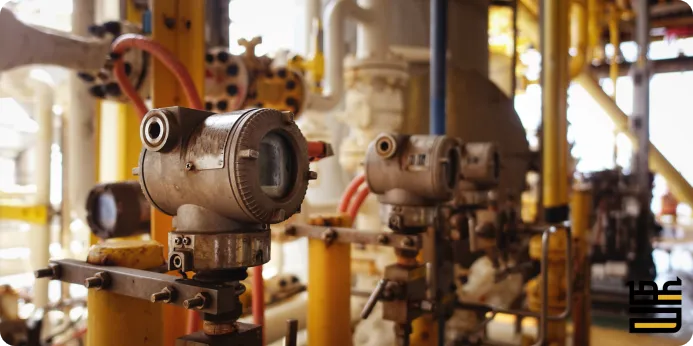
What are Types of level transmitters?
Level transmitters are essential instruments used in the petrochemical industry to measure and monitor the level of liquids or solids in tanks, vessels, or other containers. These devices ensure accurate and reliable measurements, which are critical for safe and efficient operations. There are several “types of level transmitters”, each suited for different applications and conditions in the petrochemical industry:
Capacitance Level Transmitters
- Principle: These devices measure changes in capacitance caused by variations in the liquid level between a probe and the container wall.
- Applications: Suitable for both liquids and solids, especially in non-conductive materials like oils, chemicals, or grains.
Ultrasonic Level Transmitters
- Principle: Ultrasonic waves are emitted from the transmitter towards the liquid surface. The time taken for the waves to reflect back is used to calculate the level.
- Applications: Ideal for non-contact measurement in liquids and slurries, commonly used in open tanks or corrosive environments.
Radar (Microwave) Level Transmitters
- Principle: These transmitters use radar pulses to measure the distance to the surface of a liquid or solid, determining the level.
- Applications: Suitable for harsh environments, high-pressure, and high-temperature conditions. Used in both conductive and non-conductive materials.
Differential Pressure (DP) Level Transmitters
- Principle: The transmitter measures the pressure difference between two points in the tank—typically the bottom and the top—and converts this into a level measurement.
- Applications: Commonly used for liquid level measurement in pressurized tanks.
Honeywell is a leading provider of industrial automation and instrumentation, including level transmitters. When it comes to Honeywell in Dubai, the company offers a wide range of innovative solutions for industries such as oil and gas, chemical, and water treatment. Honeywell in Dubai is known for providing high-quality, reliable level measurement devices that ensure safety and efficiency across various applications.
How to Select the Right Level Transmitter?
The choice of level transmitter—whether ultrasonic, radar, guided wave radar, capacitance, or differential pressure—depends on the medium’s properties and the installation requirements. Each technology offers distinct advantages and limitations, making it crucial to balance precision, reliability, cost, and ease of maintenance. Proper selection not only enhances operational efficiency but also ensures safety and compliance with industry regulations.
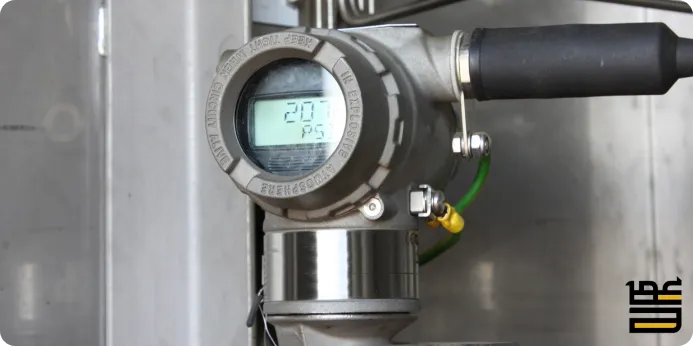
Each type of level transmitter has strengths and weaknesses depending on the medium and environment. Radar and ultrasonic transmitters are ideal for non-contact applications, while capacitance and hydrostatic transmitters work well in simpler, cost-effective setups. Selection should be based on factors like material properties, tank conditions, and measurement precision requirements.


