


Why should we use Pressure Transmitters? Uncovering the Benefits
Introduction
In an increasingly automated and data-driven world, pressure transmitter has become essential tools across countless industries. These unsung heroes of measurement technology play a crucial role in monitoring and controlling pressure, ensuring safe and efficient operations in applications ranging from manufacturing and energy production to aerospace and healthcare.
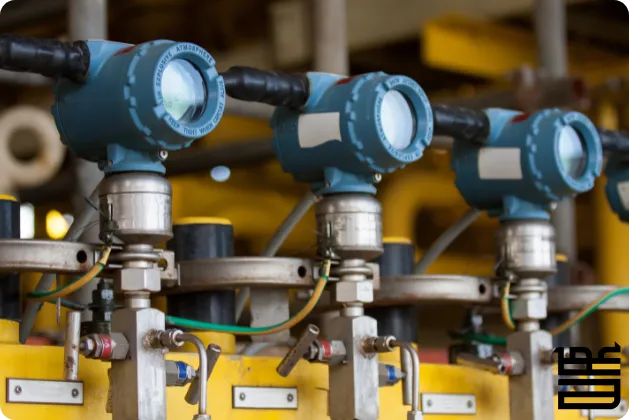

Everything about pressure transmitters
What is a Pressure Transmitter?
A pressure transmitter is a device that senses pressure and converts it into an electrical signal. This signal can then be used to monitor or control the pressure in a system. Pressure transmitter is used in a wide variety of applications, including industrial processes, medical equipment, and consumer products.
There are many different types of pressure transmitters, but they all work on the same basic principle. A pressure-sensitive element is used to detect the pressure, and this element is then connected to an electronic circuit that converts the pressure into an electrical signal. The type of pressure-sensitive element used will vary depending on the application, but some common types include strain gauges, piezoelectric crystals, and capacitive sensors.
Pressure transmitters are typically used to measure gauge pressure, which is the pressure relative to atmospheric pressure. However, some pressure transmitters can also measure absolute pressure, which is the pressure relative to a perfect vacuum. ABB in Dubai plays a significant role in providing advanced industrial solutions, including pressure transmitters. As a global leader in automation and power technologies, ABB in Dubai offers comprehensive services and support to local industries.
Pressure transmitters are an essential part of many industrial processes. They are used to monitor the pressure in pipes, tanks, and other vessels, and they are also used to control the pressure in these systems. Pressure transmitters can also be used to measure the pressure of gases and liquids, and they can be used to measure the flow rate of fluids. Proper calibration and maintenance are crucial for the accurate functioning of pressure transmitters. Siemens in Dubai offers a wide range of pressure transmitters suitable for various industrial applications. The presence of Siemens in Dubai ensures that local industries have access to state-of-the-art pressure measurement solutions.
How Does a Pressure Transmitter Work?
A pressure transmitter is a device that measures pressure and converts it into an electrical signal. This signal can then be used to monitor and control various industrial processes. Here’s a simplified explanation of how it works:
Basic Components:
Pressure Sensor: This is the heart of the transmitter. It’s designed to detect changes in pressure. There are various types of pressure sensors, such as:
- Diaphragm: A thin membrane that flexes under pressure.
- Bourdon Tube: A C-shaped tube that straightens when pressure is applied.
- Piezoelectric: Crystals that generate an electrical charge when compressed.
Transducer: This converts the physical change in the sensor (e.g., diaphragm deflection) into an electrical signal, often a voltage or current.
Amplifier: This boosts the weak electrical signal from the transducer to a level suitable for transmission and processing.
Signal Conditioner: This further refines the signal, filtering out noise and adjusting it to a standard format (e.g., 4-20 mA current loop).
Display/Output: The conditioned signal is typically sent to a display unit, a control system (like a PLC), or a data acquisition system for further analysis and action.

Types of Pressure Transmitters
Pressure transmitters are essential devices used in various industrial and commercial applications for measuring pressure and converting it into an electrical signal. They are employed in diverse fields, including manufacturing, oil and gas, power generation, aerospace, and more. Here are some of the common types of pressure transmitters based on their sensing technology:
Capacitive Pressure Transmitter
These transmitters utilize the change in capacitance between two plates due to applied pressure. They offer high sensitivity, accuracy, and stability, making them suitable for a wide range of applications.
Strain Gauge Pressure Transmitter
These transmitters use strain gauges, which are thin wires or foils that change resistance when stretched or compressed due to pressure. They are known for their reliability, ruggedness, and ability to withstand harsh environments.
Piezoelectric Pressure Transmitter
These transmitters rely on the piezoelectric effect, where certain materials generate an electrical charge when subjected to mechanical stress (pressure). They are commonly used for dynamic pressure measurements and applications requiring high-frequency response.
Resonant Wire Pressure Transmitter
These transmitters use a vibrating wire whose resonant frequency changes with applied pressure. They offer excellent accuracy and long-term stability, especially in high-temperature and high-pressure environments.
Siemens in Iraq has played a significant role in rebuilding and modernizing the country’s infrastructure. Siemens in Iraq has been involved in numerous projects, including enhancing the electrical grid and developing power generation facilities.
Endress Hauser in Dubai is a key provider of pressure transmitters and other process automation solutions in the region. The presence of Endress+Hauser in Dubai ensures that local industries have access to high-quality instrumentation and support services.
Applications of Pressure Transmitters
“Pressure transmitters” are essential devices in various industries for monitoring and controlling pressure. They convert pressure measurements into electrical signals that can be used for analysis, control, and automation. Here are some common applications of pressure transmitters:
- Process Control: Pressure transmitters are used to monitor and control pressure in various industrial processes such as chemical manufacturing, oil and gas production, and power generation.
- Hydraulic and Pneumatic Systems: Pressure transmitters are used to monitor and control pressure in hydraulic and pneumatic systems used in machinery, automation, and transportation.
- Level Measurement: Pressure transmitters can be used to measure the level of liquids in tanks and vessels by measuring the hydrostatic pressure at the bottom.
- Flow Measurement: Pressure transmitters, in conjunction with other devices, can be used to measure the flow rate of fluids in pipes and channels.

Conclusion
Pressure transmitters are essential instruments in various industries for accurately measuring and monitoring pressure. They convert pressure readings into electrical signals that can be easily transmitted and processed. Different types of pressure transmitters cater to specific applications and environments, offering features like digital displays, data logging capabilities, and communication protocols.
While pressure transmitters offer significant benefits, it’s important to be aware of potential issues such as calibration errors, signal interference, and environmental effects. Regular maintenance and calibration are crucial for ensuring accurate and reliable pressure measurements.
Overall, pressure transmitters are valuable tools that contribute to the safe, efficient, and optimal operation of numerous industrial processes. By selecting the right type of transmitter and adhering to proper maintenance practices, industries can effectively leverage the benefits of pressure measurement technology.


