


All notes about most accurate flow meter
Introduction
A flow meter is a device used to measure the rate of flow of liquids or gases within a system. In various industries—such as water treatment, chemical processing, and oil and gas—having an accurate flow meter is crucial for monitoring, controlling, and optimizing processes.
The most accurate flow meters are typically those that have minimal deviation from the true flow rate, offering high precision in their readings. These flow meters are designed to handle various fluid types, pressure conditions, and flow ranges while maintaining reliability and consistency.


Everything about most accurate flow meter
What are The Most Accurate Flow Meter Types?
When it comes to accurate flow measurement, certain types of flow meters stand out. Here’s a breakdown of some of the most accurate flow meter types:
Coriolis Flow Meters
- Mechanism: These meters measure mass flow directly by sensing the Coriolis force, which acts on a fluid as it flows through a vibrating tube.
- Accuracy: Typically offer accuracy in the range of 0.1% to 0.5%.
Advantages:
- High accuracy over a wide range of flow rates, temperatures, and fluid properties
- Can measure mass flow directly, eliminating the need for separate density or temperature measurements
No moving parts, reducing maintenance requirements
Positive Displacement Flow Meters
- Mechanism: These meters use mechanical elements to divide the fluid flow into fixed, known volumes. By counting these volumes, they measure the total flow.
- Accuracy: Can achieve high accuracy, often better than 0.5%.
Advantages:
- High accuracy for liquids with consistent viscosity
- Relatively simple and reliable operation
Applications of Highly Accurate Flow Meters
Highly Most accurate flow meter play a crucial role in various industries where precise measurement of fluid flow is essential. Here are some key applications:
Custody Transfer
- In the oil and gas industry, accurate measurement of crude oil, natural gas, and refined products during custody transfer (transfer of ownership) is critical for billing and contractual agreements. Highly accurate flow meters, such as Coriolis meters, ensure fair trade and minimize financial disputes.
Process Control and Optimization
- In chemical plants, pharmaceuticals, and food processing, precise flow measurement is vital for maintaining product quality, controlling reactions, and optimizing processes. Accurate flow meters enable efficient use of raw materials, reduce waste, and ensure consistent product output.
Water Management
- In water treatment plants and distribution networks, accurate flow meters help monitor water usage, detect leaks, and manage water resources effectively. This is crucial for conserving water, reducing costs, and ensuring a sustainable water supply.
Environmental Monitoring
- Highly accurate flow meters are used to measure emissions from industrial facilities, monitor wastewater discharge, and assess air quality. This data helps ensure compliance with environmental regulations and protect public health.

What Factors Affecting Flow Meter Accuracy?
“Most accurate flow meter” is vital for many applications, but various factors can introduce errors. Firstly, the fluid itself plays a significant role. Its viscosity, density, and conductivity can all influence readings, especially for certain meter types. Additionally, the presence of bubbles or solids can disrupt flow and compromise accuracy.
Secondly, installation and piping conditions are crucial. Sufficiently long, straight pipe runs are necessary to ensure a stable flow profile, as bends and valves can create disturbances. Matching the flow meter size to the pipe diameter is also essential. If the flow pulsates, using flow conditioners can help improve accuracy.
Environmental factors also come into play. Temperature and pressure variations can affect both the fluid and the meter itself. Some meters have built-in temperature compensation, but significant changes may still require adjustments. Excessive vibration in the environment can also impact meter performance.
Finally, the specific flow meter technology and its condition are important. Regular calibration is essential to maintain accuracy, as wear and tear can degrade performance over time. Different flow meter types have inherent limitations and sensitivities, so choosing the right one for the application is crucial.
Ultrasonic flow meters, which use sound waves, are also known for their high accuracy and are widely used in non-invasive applications. ABB in Saudi Arabia supports local industries with advanced flow meters that ensure operational efficiency and regulatory compliance. Magnetic flow meters are another highly accurate option, especially for conductive fluids like water and wastewater.
The accuracy of a flow meter can be influenced by factors such as fluid properties, installation conditions, and calibration. Endress Hauser in Dubai is known for offering reliable flow measurement solutions tailored to the region’s industrial sectors, such as oil and gas, water treatment, and chemical processing. In high-precision industries like pharmaceuticals or food processing, the most accurate flow meters ensure product consistency and quality control.
The mechanical installation of flow meters involves mounting the flow meter into the pipeline. It’s critical to ensure proper alignment and orientation of the flow meter, as well as considering factors like upstream and downstream straight pipe requirements. The use of appropriate gaskets and seals is vital to prevent leaks and ensure accurate measurements.
Differential Pressure Flow Meters
Differential pressure flow meters are one of the most common types of flow meters used in various industries. They determine the flow rate of a fluid by measuring the pressure difference created by a constriction in the flow path.
How DP Flow Meters Work:
- Restriction: A DP flow meter introduces a restriction in the pipe, such as an orifice plate, Venturi tube, or flow nozzle.
- Pressure Difference: This restriction causes a pressure drop across the meter. The pressure difference is proportional to the square of the flow rate, according to Bernoulli’s equation.
- Measurement: Pressure sensors measure the pressure upstream (before the restriction) and downstream (after the restriction).
- Calculation: The flow meter then calculates the flow rate based on the measured pressure difference and the known characteristics of the restriction.
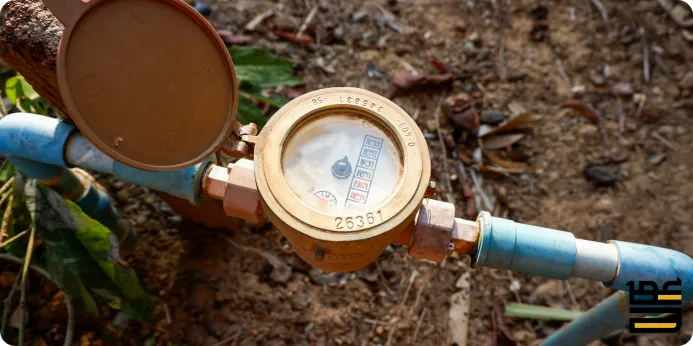
When selecting the most accurate flow meter, several factors must be considered, as different types excel in various applications and conditions. The most accurate flow meters are typically those that offer high precision, repeatability, and reliability, making them suitable for critical industrial processes. Among the options, Coriolis flow meters are often regarded as the most accurate. They measure mass flow directly, which makes them ideal for applications requiring precise measurement, such as chemical processing and custody transfer. Coriolis meters can achieve accuracy levels within ±0.1%, making them the top choice for applications where measurement precision is paramount.
Another highly accurate option is the ultrasonic flow meter, known for its accuracy of within ±0.5% for liquids. Ultrasonic meters are particularly well-suited for applications involving clean liquids or gases, as they are non-intrusive and have no moving parts. This feature minimizes the need for maintenance and enhances their reliability. Magnetic flow meters are also highly accurate, with an accuracy of about ±0.2% for liquids. They are commonly used for measuring the flow of conductive fluids in industries such as wastewater treatment and chemical processing. However, they are not suitable for measuring gases or non-conductive liquids.


